Find the signal in your results.
Have AI examine campaign exports, group patterns and flag unanswered questions. Get to a focused discussion about what deserves another test.

Put AI to work on the research and prep, so your team has more room for the creative work.
Book a free 20-minute call
Pulling reports, studying competitors and preparing briefs can eat the time you wanted for ideas. Learn to give AI a useful share of that work.
Have AI examine campaign exports, group patterns and flag unanswered questions. Get to a focused discussion about what deserves another test.
Bring together customer language, proven product facts and examples you admire. Explain what makes those references good so AI can prepare directions worth developing.
Create reusable instructions for recurring reports and keyword or competitor reviews. Once the process is useful, explore which steps your tools can automate.
Imagine the team is choosing what to advertise next. AI can prepare the analysis and test ideas, leaving you more time to shape the message. This is an illustrative workflow, not a client result.
Match the reporting periods, connect campaign IDs to lead-quality records and compare the outcomes that matter to the business. Flag missing links.
Check what counts as a qualified inquiry and whether the comparison is fair. A busy campaign isn't automatically a valuable one.
Use the findings, customer questions and approved references to draft a brief: audience, message, evidence and a few angles to explore.
Choose an angle with taste and brand knowledge. Keep the interesting idea, correct the weak assumption and reject claims you can't support.
Outline creative variations and how to judge them. Save your corrections in the reusable brief so the next attempt starts with better guidance.
Set the budget, select the finished creative and approve publication. Review the next results before scaling anything.
Start with the right ingredients. Use exports you can share, a definition of a valuable result and two or three creative references with notes about why they work. File upload needs an approved AI tool that can read those files; a small table can be pasted into chat.
The useful output is a brief you can create from, with evidence you can check. You still decide what deserves to become a campaign.
Paste a small, non-sensitive table into your approved AI chat, along with your goal and one annotated reference. You don't need to connect an ad account for this exercise.
Hello Aristotle
Help me turn marketing evidence into a useful brief.

Goal and audience: [what we want to achieve, for whom]
Business outcome and definition: [for example, qualified inquiries and our criteria]
Evidence: [paste or attach labeled performance data, dates, metric definitions and customer feedback]
References: [approved creative or content examples, with notes on what is good]
Constraints: [product facts, brand rules, budget limits and claims to avoid]

First, check whether the dates, metric definitions and attribution are comparable. Ask up to three questions if missing context would change the recommendation. Never invent figures, sources or reasons for a result. If the business outcome or its tracking source is missing, ask for it and leave the success metric undecided.

Then prepare:
1. Three useful observations, each tied to a supplied source. Separate facts from hypotheses. Show any calculations.
2. A concise creative or content brief: audience, message, supporting evidence and two possible directions. Explain what informed each direction.
3. One small test for the team to consider, the outcome to measure and what remains uncertain.

Do not treat clicks or rankings as business growth, or correlation as proof. Leave creative selection, spending and publication to us. End with decisions we need to make, not actions you have taken.One impressive generated ad won't give you a dependable marketing process. We'll start with a small piece of real work and improve how you produce it.
Choose a repeatable task: a campaign readout, an SEO opportunity review or research for a creative brief. Define what a useful result would let the marketer do next.
Organize the relevant evidence and annotate strong examples. Try the task together, explain what missed the mark and turn those corrections into reusable instructions.
Give another teammate fresh material and see whether the routine holds up. Keep the brief, references and review criteria. Then identify sensible automation steps for your existing tools.
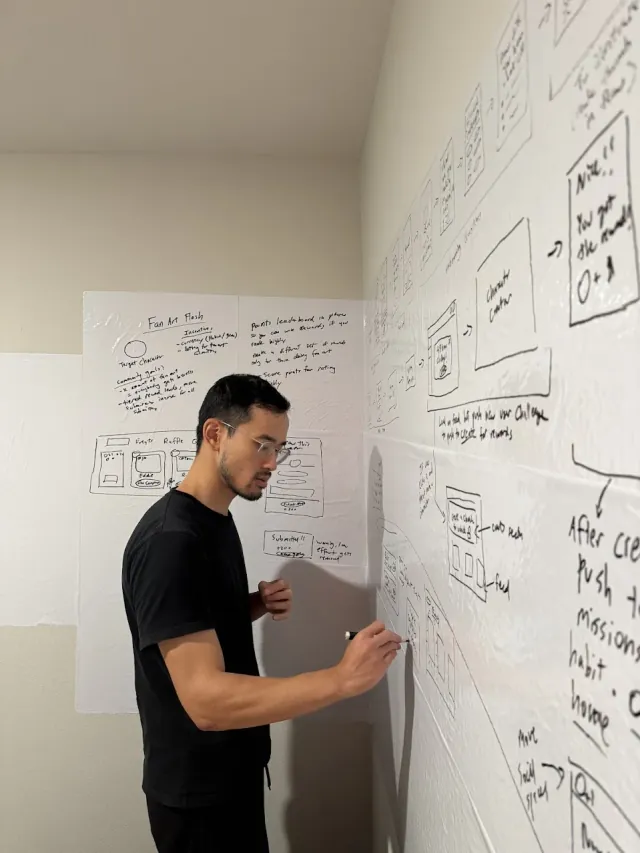
Sydney Liu, founder of Hello Aristotle, leads the training. We'll work from the marketing problems you want to solve, whether that's a report nobody has time to dig into or creative that keeps missing the brief.
We can prepare around a few priorities, review selected campaign materials or speak with team members first. The depth depends on what would make the session useful.
Meet Sydney Liu →“Because of Hello Aristotle, I learned what it takes to build the foundation of something transformational for my company. With AI, I can now run the company at the equivalent of 20 people all at once.”
These free guides help you supply the missing context and work out why an answer fell short. Try them with a campaign brief or a piece of copy you're improving.
Turn selected notes, documents and emails into a useful work profile. Let AI find the gaps, ask you better questions and save the context for next time.
Find the missing context, improve the brief and get a better answer. Use one repair prompt, then keep the lesson for the next task.
Often AI has the request but not the ingredients: the customer's words, accurate product details or examples of work you actually like. We'll practice supplying those inputs and giving useful feedback. A more elaborate prompt can't make up for missing evidence.
Yes! Those are useful places to explore research, analysis and content preparation. We'll choose a focused task based on your priorities. AI can help compare keyword opportunities and existing content, but training doesn't guarantee rankings, AI mentions or campaign returns.
We can start with an approved AI chat tool and selected information you can safely share. Use pasted tables or file uploads where supported. Live integrations are optional and scoped separately. We'll agree the access and setup needed first.
Absolutely. A creative, a content marketer and an analyst can bring different perspectives to the same brief. Tell us what people already use so we can choose a starting point that gives everyone something to practice.
The first paid team session starts at one hour. Group size, total duration and format are flexible, and workshops are one option. We'll agree the scope, price, delivery arrangements and any follow-up before you book paid training. The initial 20-minute call is free.
Aristotle Certificates recognize proficiency milestones in practical work. They aren't accredited qualifications or employer certificates. The focus is being able to use what you've learned on the marketing in front of you.
It's a good fit when you have marketing work to improve and want your people to become more capable with AI.
Bring a real bottleneck. A report, recurring research task or inconsistent creative brief gives us something useful to work on. You don't need an AI strategy already written.
Looking for a different kind of help? If you need someone to manage ad spend, deliver an SEO campaign or award a professional marketing qualification, tell us first. This offer is practical AI training; those services aren't included.
Tell us which research or reporting tasks keep getting in the way. We can explore a practical starting point for your team.
Book a free 20-minute call