AI training for managers

Take recurring work off your plate, give people clearer direction, and help your whole team achieve more with AI.

Book a free 20-minute call
Less chasing. More leading. beside an illustrated Aristotle penguin mascot.

More room for the part of management you're good at.

Work directly on a responsibility you want to make easier, on your own or with colleagues. An initial paid team session starts at one hour. We agree the format and price around your goals.

Small team? Get another pair of hands.

Have AI prepare the first draft of a brief, organize a messy request or turn your explanation into a useful example. With fewer handoffs to arrange, you can start simply and take more of the doing off your own plate.

Larger team? Keep the moving parts in view.

Bring agreed goals, standups and commitments together. Prepare for individual conversations, spot dependencies that need attention and help colleagues get the background they need without every question coming through you.

Walk into a 1:1 ready to help.

An illustrative example: it's Tuesday and Maya is preparing a customer briefing while covering urgent requests. Your 1:1 starts in ten minutes. AI gathers the relevant notes so you can spend the conversation helping her move forward.

  1. Remove the actual blocker

    Your AI-prepared 1:1 brief

    The draft still needs its figures checked. Who can confirm them, and when? Source: Monday's update. No checking owner is named in the notes.

    Your management call

    Ask what has changed. Confirm the right owner and agree the next step with Maya.

  2. Make your expectations easier to use

    Your AI-prepared 1:1 brief

    Suggested outline: customer question → checked figures → recommendation → next decision. Leave figures marked for review. Sources: your supplied structure and Monday's update.

    Your management call

    Check that it shows the standard you mean. Discuss it together rather than leaving her to guess.

  3. Resolve competing commitments

    Your AI-prepared 1:1 brief

    Urgent coverage takes priority on Tuesday; the briefing is due Thursday. Does this still leave enough time, or is help needed? Source: Tuesday's team plan. Available capacity is unknown.

    Your management call

    Confirm whether Tuesday's plan still applies. Choose what moves, what gets help and what stays, then agree any changes with the people affected.

The working context Fictional inputs for Tuesday's 1:1: Maya's previous feedback asks for a good example; Monday's update says the figures need checking; Tuesday's plan prioritizes urgent requests, with the briefing due Thursday. You also supply an approved structure: customer question, checked figures, recommendation, next decision. Confirm the notes are still current.

With approved source connections and a tested schedule, the same preparation can happen before each 1:1. You arrive with useful questions and more attention for the person in front of you.

Try this workflow yourself

Use your own conversation

Choose one upcoming 1:1 and a small set of work-related notes you are permitted to use. Remove unnecessary personal information. This prompt works with material you provide; it does not connect to your team's tools by itself.

Hello Aristotle

Prepare for your next 1:1

Help me prepare for a useful 1:1.

Colleague or anonymized role: [name or role]
Date of conversation: [date]
Agreed goals and responsibilities: [paste or attach]
Recent dated updates: [paste or attach]
Previous agreed actions and the colleague's own feedback: [paste or attach]
Relevant examples of good work: [include if available]

Use only this material. Ask up to three questions if an important detail is missing. Then prepare a brief with: progress to acknowledge; commitments or dependencies to clarify; two useful questions for the conversation; and one draft action I could take to help. Cite the source and date beside each factual point. Separate facts from possible explanations. If updates conflict, show both. Do not infer motivation, performance ratings or personal traits. Do not treat silence as evidence of poor work.

Keep personnel information within its approved audience. Do not send messages, change assignments or save new personal notes. I will check the brief, hear my colleague's perspective and decide what to do.

Teach AI one job you already know well.

We work through your actual management task together. The goal is to understand why the setup works, so you can adapt it when the next task comes along.

  1. Choose the work you'd like back off your desk.

    Start with something familiar: preparing a team brief, gathering context for a conversation or explaining an assignment. Decide what a helpful result would contain and which choices need you.

  2. Show it what you mean by good.

    Supply the goal, background, a useful example and your review criteria. Answer focused questions about what you usually correct. Refine the output together until the instructions reflect how you actually want the work done.

  3. Make the second attempt without starting over.

    Save the approved instructions and context, then try a new input. You practise correcting the result yourself. Leave with a reusable routine and a way to check it before handing it more responsibility.

Start with a helper. Build toward a team that works better together.

There is more available than occasional help with a message. Each step builds on a working foundation, at a pace that fits your team.

Keep your expectations within reach.

Save the examples and instructions that explain your standards. A colleague preparing an assignment can retrieve that guidance through AI before bringing you a draft. Personal 1:1 notes stay in their separate, approved audience.

Prepare before the meeting appears on your radar.

After testing the routine, connect approved updates and set a schedule. Your AI can assemble upcoming commitments and questions before a team review, ready for you to check while there is still time to help.

Carry an agreed change through the team.

Suppose you and Maya change her priorities. With the right connections and permissions, the approved change can reach a colleague's AI workflow and inform its next brief. You define which updates can travel automatically and which need a person to check them first.

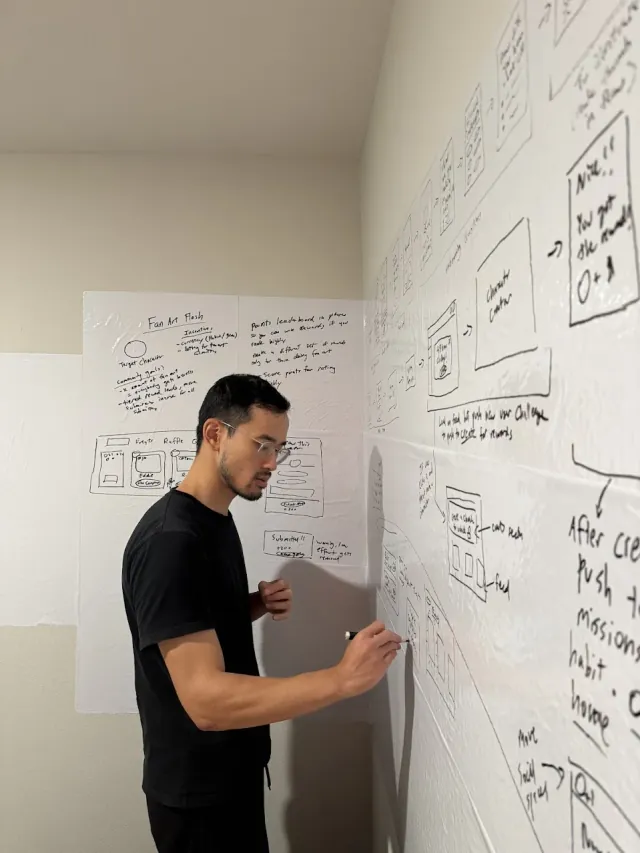
Sydney mapping out product ideas on a wall of whiteboards
Sydney Liu, founder of Hello Aristotle

Taught by someone who knows the juggling act.

Sydney Liu has managed teams while building his companies, with people and projects moving in parallel. Keeping every expectation, deadline and missing detail in one person's head gets harder as a team grows.

In his own work, AI has helped him make quick mockups to explain a direction, share relevant background and see where someone needs help. That experience shapes the sessions: make the next piece of management work easier, then teach you how to extend the setup.

Meet Sydney Liu →

What our learners say.

Sabrina Wang, a CEO coach, describes her own experience learning with Hello Aristotle.

“I already used AI a lot, but I wanted it to do more than help me brainstorm. Seeing how Hello Aristotle sets up real workflows, like planning things and writing follow-up emails, gave me a lot of ideas for automating my own work and life.”

Sabrina WangCEO Coach · Mochary Method

A few practical questions before we start.

What if I've only used AI for occasional questions?

That's a useful starting point. You can learn this without programming. Bring a responsibility you understand well, and we'll turn your knowledge into a manageable AI routine. Managers already using AI regularly can go deeper into recurring preparation and team workflows.

Can I come on my own, or bring other managers?

Either works! You can focus on your own responsibilities, or learn alongside colleagues and compare what helps each team. When a workflow involves direct reports, we can discuss who should join and which parts are useful to practise together.

Which AI tools would we use?

We begin with what your organization allows. ChatGPT or Claude can help with material you supply; tools such as Codex or Claude Cowork can support broader work when the needed capabilities and access are available. We choose around the job and your setup. A chat thread alone will not automatically read everyone's updates or run recurring work.

Could this help me prepare performance reviews?

It can help organize agreed goals, examples of work and feedback into a factual starting point. Check the sources, include the person's perspective and follow your organization's rules for employee information. You remain responsible for the assessment. We would not teach AI to rank colleagues or guess their motivation from activity.

What should I bring?

Bring a task you keep doing and, if you can, an example of what a good result looks like. A few permitted notes are enough to start the conversation. For team work, preparation may also involve talking with colleagues or reviewing relevant materials. We'll agree what is useful before the session.

What would the time commitment and price be?

You can begin with a free 20-minute conversation about your goals. An initial paid team session starts at one hour. Individual paid sessions are one hour. You receive a tailored quote for the agreed work. Participant numbers, delivery format and any further sessions are flexible. We settle those details together before you commit.

Is there a qualification at the end?

We offer Aristotle Certificates for reaching practical proficiency milestones. They are not accredited qualifications or employer certificates. The emphasis is being able to do useful work with AI, and knowing how to check and improve it when the task changes.

Would this suit my management role?

If you can describe a recurring responsibility and recognize a good result, we have a useful place to begin.

For a new manager Start with one clear responsibility and learn how to give AI the information it needs. You do not need a department-wide rollout to begin.

For an experienced team lead Bring the coordination or preparation that has become hard to keep up with. We can explore how to support more people without making you the route for every detail.

Leading beyond your own team?

Explore decision preparation and communicating your reasoning with AI.

Explore executive training

Looking for a different starting point?

Browse training for another role, your wider organization or a specific tool.

See all AI training

Which part of managing would you happily hand over?

Tell us what keeps landing back on your plate. In a free 20-minute call, we can explore a useful starting task and how training could help you and your team.

Book a free 20-minute call

Bring the work
you want to change.

Start with a free 20-minute expert session. Bring one task and work through where AI could help.

Start with one real task, an idea, or something you have already tried.

Book a free 20-minute AI session

Submitted!
We’ll be in touch.

Book your free 20-minute session.

Choose a time