Keep the story in view.
Carry the question and any promises forward so the next representative can pick up where the last left off.

Help your team give customers faster, more accurate, more personal answers.
Book a free 20-minute call
When a promise disappears between representatives, the customer has to chase an answer. Practice bringing the conversation, service guidance, and next step together.
Carry the question and any promises forward so the next representative can pick up where the last left off.
Give AI the team's service guidance and product facts, then ask which sources support its reply.
Flag unusual or uncertain cases early, leaving people time for judgment and care.
Illustrative case: A customer was told a replacement would ship Friday. The support guide requires a photo review first, but the review is pending.
AI places the earlier reply beside the current guide and pending photo review, then flags the disagreement.
The representative checks the case and decides whether to honor or escalate the promise.
Draft: "I see you were told the replacement would ship Friday. I'm sorry for the conflicting information. The photo review is still pending. [Confirm the next update before sending.]"
Resolve how to handle the earlier promise, confirm the next step, and personalize the reply before sending.
AI prepares a short handoff with the question, prior promise, review requirement, current status, and unresolved decision.
The representative checks the facts, owns the follow-up, and keeps the customer from repeating the story.
Start with one case. Use case examples the team has cleared for practice.
Keep the customer's story in view and give the next person a clear step.
Compare draft replies with what happened and the guidance the team used. Notice where AI helps the next person continue the conversation.
Hello Aristotle
Use only the information below to draft a customer reply.

Customer question: [paste]
Case history and earlier promises: [paste]
Current support guidance and date: [paste]
Verified product or case facts: [paste]
Confirmed next step and owner: [paste]
Details to keep internal: [paste]

Separate confirmed facts from gaps or conflicts. Identify the supplied source for each important claim. Do not invent policy, product behavior, refunds, timing, or promises. If a source conflicts or an important fact is missing, state what a person should check and draft a brief holding reply with a placeholder for the next step. Otherwise, write a respectful, personal reply that answers the question. List sources used. Do not send; a representative checks and approves the final reply.These repeatable checks are often called evaluations, or evals. Agree on what makes a helpful answer, then use the same questions to check each draft.
Does it match the service guide and this case? An invented fact or promise fails the check, even if the reply sounds great.
Does it answer the customer's question and move things forward without making them repeat known details?
Does the customer know what happens next and who owns it?
If the sources disagree or a commitment is unclear, flag the gap and bring it to a person instead of guessing.
Your first team session lasts at least an hour, built around a support task you want to improve. We agree on scope and price before paid work.
Bring together the help guide, product details, service tone, and escalation rules. Add only case history that helps answer this customer's question.
When a representative confirms an answer and its source, add it to shared support guidance so the next draft has the right context.
Start with drafts beside a representative and use the same checks on fresh cases. If the process keeps working, consider a narrow preparation task for automation, with a way to notice problems and pause it. Later, review patterns across replies and suggest knowledge-base improvements for the team to approve.
Need to keep the work moving after support hands it to another department? Explore AI training for operations teams.
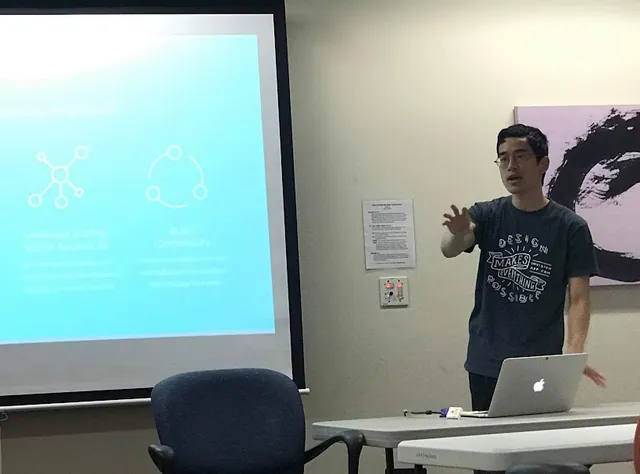
Sydney Liu built two consumer companies with large user communities and small teams. Support questions could arrive faster than the team could get through them.
He learned to make answers easier to find and give people room to handle difficult cases. The training brings those lessons to AI, one customer question at a time.
Meet Sydney Liu →Sabrina Wang on learning to turn everyday tasks into practical AI workflows.
“I already used AI a lot, but I wanted it to do more than help me brainstorm. Seeing how Hello Aristotle sets up real workflows, like planning things and writing follow-up emails, gave me a lot of ideas for automating my own work and life.”
Start with drafts and a person checking each one. If a narrow task holds up across new cases, the team can decide whether it is ready for automation. Keep a person able to pause the routine and handle unusual cases.
One typical request, the answer your team uses, and a few examples you can share. You do not need to rebuild the whole knowledge base first.
Not by itself. A person can save a verified answer in shared support guidance for future use. That changes the context you give AI; it does not retrain the underlying model.
We focus on your service work and sources, not one support platform. We will check the setup and scope before planning any live connection or automatic update.
Start with a free 20-minute call for ideas and suggestions. The first paid team session is at least one hour; team size, format, and total time vary. We agree on scope and price before paid work.
Whether you answer support questions yourself or lead a larger department, begin with one recurring request and a few useful examples.
Owner or small team. Bring one product guide, a few common questions, and reply examples you can share. Map what a useful answer needs and where you should step in.
Team lead or larger department. Bring shared service standards, escalation guidance, and reviewed replies. Decide how to keep good answers consistent while giving representatives room to personalize them.
Bring one support question your team is tired of answering twice. On a free 20-minute call, we can trade ideas for a practical first exercise and what it would take to build from there.
Book a free 20-minute call